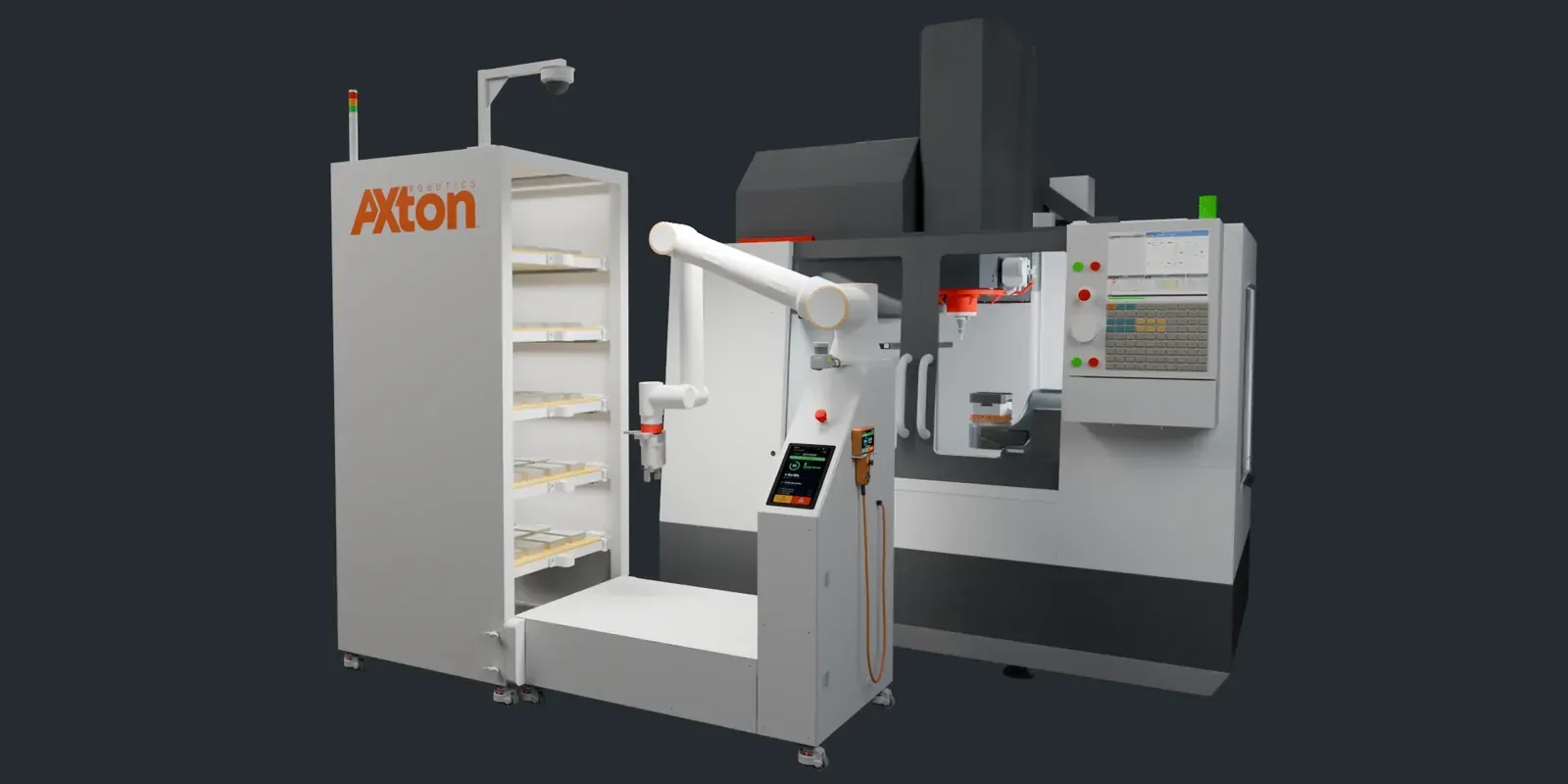
In April, we introduced the carousel.
A tall cabinet with 10 rotating shelves that brought every part up to the robot. We were proud of it. It worked.
This post is about why we replaced it anyway.
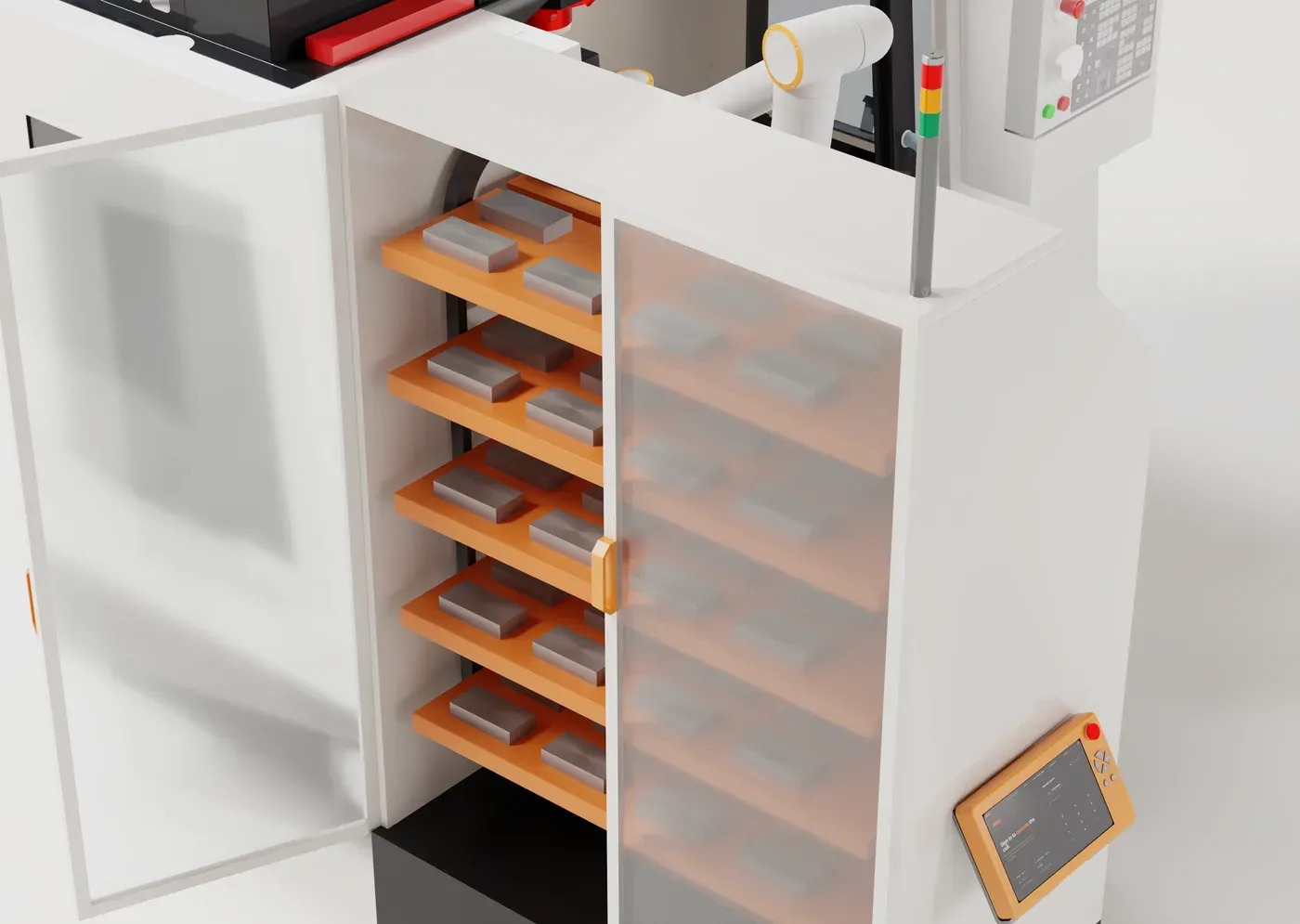
The carousel looked amazing. Trays rotating inside a cabinet, presenting each part to the robot like a magic trick.
But the more we built and tested, the more one question kept coming back.
Why make the cabinet move when the robot already can?
Every motor, rail, and indexing mechanism in that carousel was one more thing to buy, assemble, calibrate, and repair. One more thing that could fail at 3am with nobody watching.
And all that motion pushed the cost up. Cool doesn't matter if shops can't afford it.
So we opened the designs again. And started over.
The new station uses a simple tower with five large sliding shelves. The shelves pull all the way out, giving the arm clear room to work.
The robot opens a shelf, picks or places the part, and closes it again.
No motors in the storage. No indexing mechanism. Far fewer things to break.
We still kept the tight floor space in front of most CNCs in mind. The tower stays compact and on wheels.
| Feature | Carousel | Axton Tower |
|---|---|---|
| Shelves | 10 | 5 |
| Load per shelf | 100 lb | 250 lb |
| Total capacity | 1,000 lb | 1,250 lb |
| Height per shelf | Limited | About 10 inches |
| Motors in storage | Yes | None |
| Cost | Higher | Lower |
More reliable. Fewer moving parts means fewer failure points and less maintenance. The robot is already the most capable part of the cell, so we let it do the work.
2.5 times the load per shelf. Each shelf now holds 250 lb, up from 100 lb. More total capacity with half as many shelves.
Room for bigger parts. About 10 inches of clearance per shelf, so shops can load parts the carousel could never fit.
Lower cost. Removing the motion system takes out a large share of the hardware cost. Those savings go straight to our customers.
We changed the storage, not the brain.
The AI vision, radar awareness, self-aligning AprilTags, touchscreen, mobile app, cloud support, and plug-and-play setup all carried over to Axton Tower.
Redesigning this close to launch isn't free. It means rebuilding, retesting, and pushing our timeline.
We'd rather lose a few months than ship a machine we no longer believe in.
It's an easy lesson to forget in automation.
Engineers love clever mechanisms. Shop owners love machines that just run.
The carousel taught us a lot. Axton Tower is what we learned.
Next, we'll share technical drawings, test results, and what shop owners tell us when they see it in person.
Want to see Axton Tower running on your parts? Get in touch. We'd love to show you.
Axton Tower is the Axton Robotics CNC machine tending station that replaced the carousel. A cobot opens one of five large sliding shelves, picks or places the part, and closes it again, with no motors in the storage.
The carousel worked, but its motors, rails and indexing mechanism added cost and failure points. The robot can already move parts, so the storage no longer needs to.
Each of its five shelves holds 250 lb, for 1,250 lb in total, with about 10 inches of clearance per shelf.
Everything smart: AI vision, radar awareness, self-aligning AprilTags, the touchscreen, the mobile app, cloud support and plug-and-play setup.
You have the machines. You have the work. What you don't have is someone to stand in front of the CNC all night.

Michael Nessim
May 28, 2026 — 3 min read

Most robots in machine shops are blind. They only work if every part sits exactly where it's supposed to. We wanted ours to look first.
Michael Nessim
May 14, 2026 — 3 min read