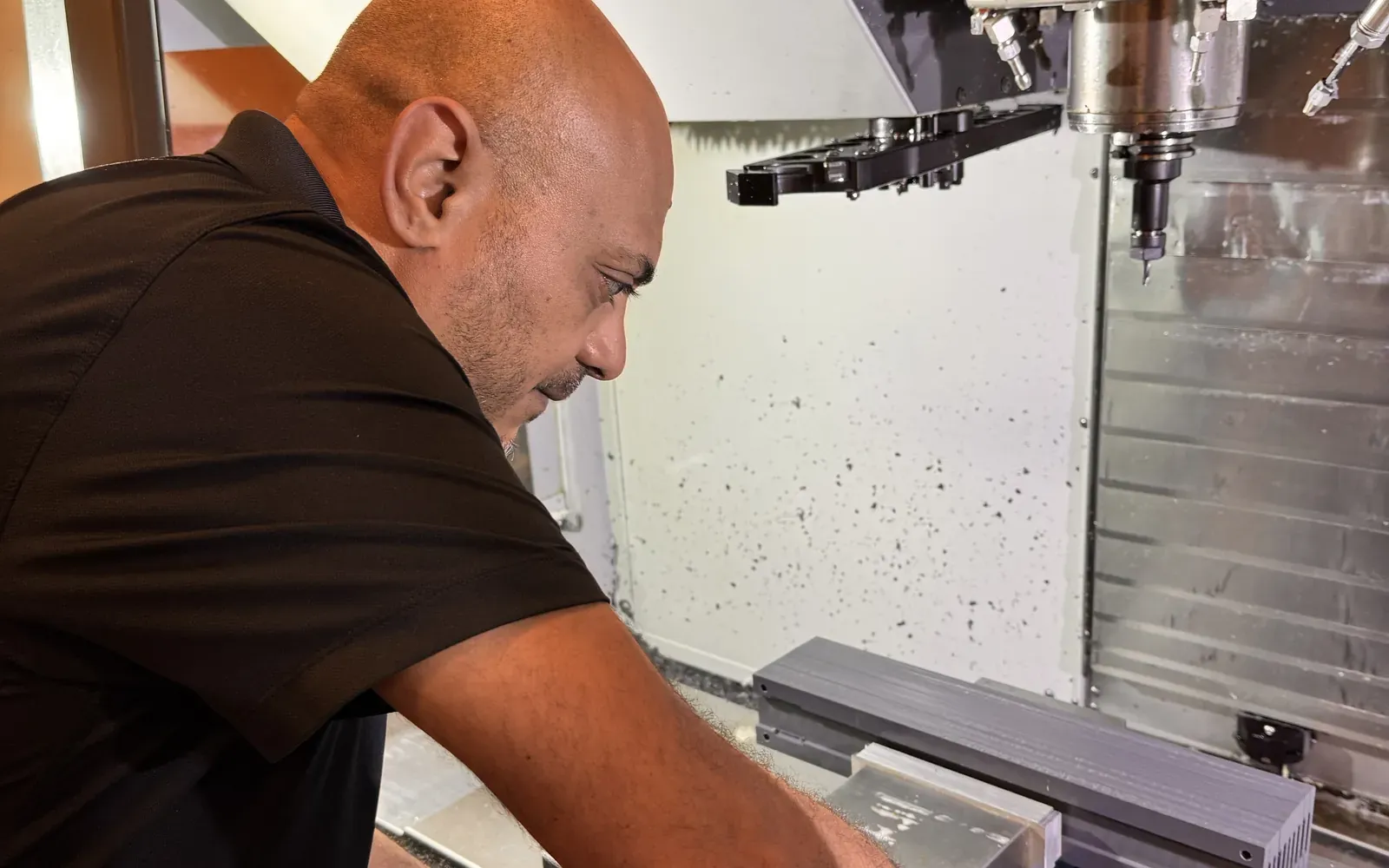
You have the machines.
You have the orders.
What you don't have is someone to stand in front of the CNC at 2am, loading parts.
If that sounds familiar, you're not alone. It's one of the most common things we hear from shop owners.
Machine tending is simple to describe.
Open the door. Unload the finished part. Load the next one. Close the door. Press start. Wait. Repeat.
All shift. Every shift.
It's repetitive, it's often on nights and weekends, and it doesn't use half of what a good machinist knows.
So people leave. Or they never apply.
A machine tender can cost a shop $4,000 to $5,000 a month. If you can find one.
But the bigger cost is the one nobody invoices you for.
An idle spindle.
Every hour your CNC sits waiting for someone to load it, you paid for the machine and got nothing back. Nights, weekends, and lunch breaks add up fast.
Many shops own machines that could run far more hours than they do. The machine isn't the bottleneck. People are.
Experienced machinists are retiring. Fewer young people are walking into shops.
The ones who do want careers, not the night shift at the door of a VMC.
And every time someone leaves, you lose weeks of training too.
Let's be direct, because this question always comes up.
We are not building robots to replace your people.
We're building them to replace the part of the job your people don't want.
The loading. The unloading. The waiting. The 2am shift.
Here's what changes when a robot handles the tending.
The person who used to babysit one machine can now run several stations at once.
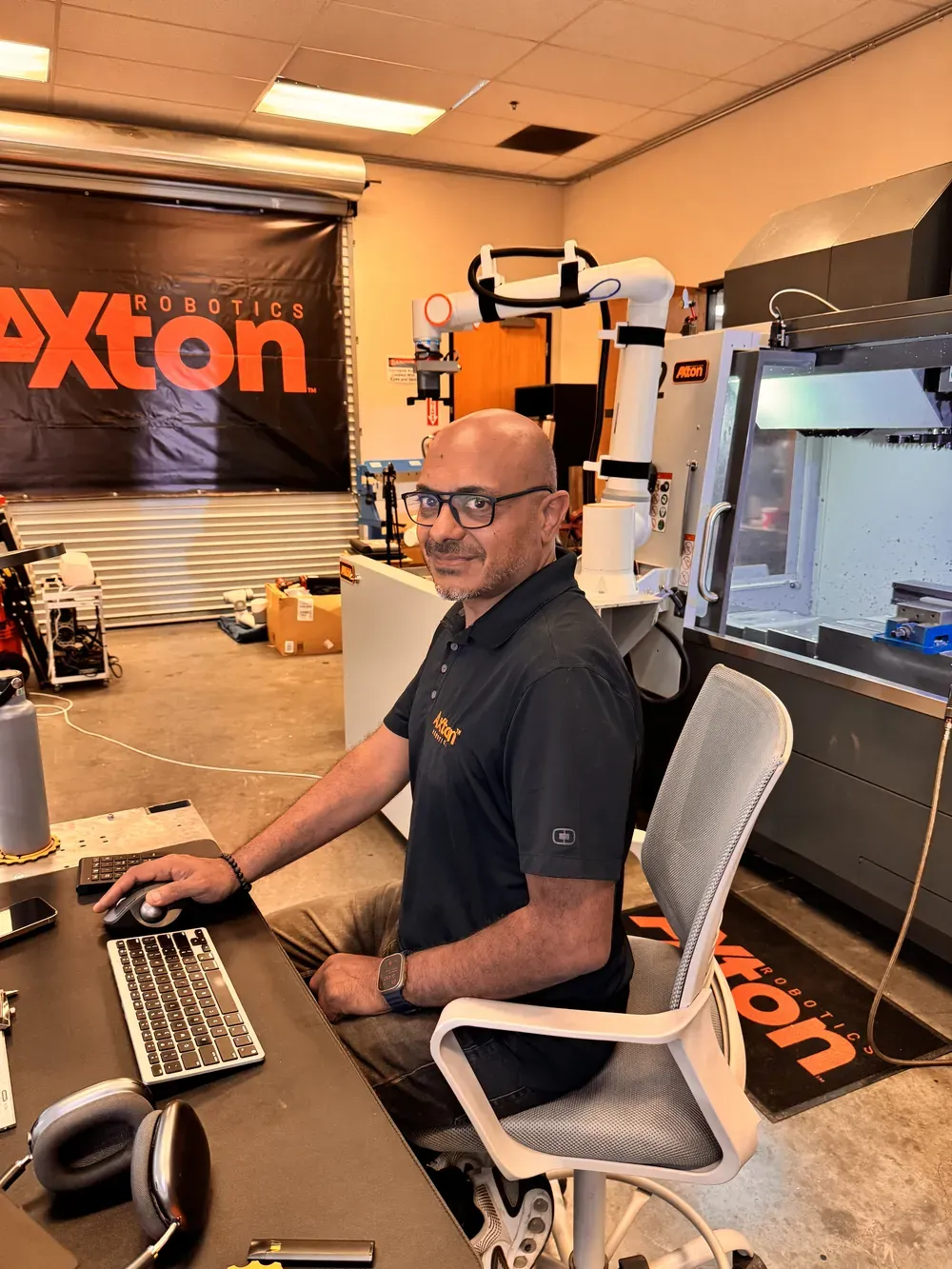
They program jobs. They set up the next part. They check quality. They solve problems.
That's a better job. It pays better, it's more interesting, and it's the kind of role people actually stay in.
One skilled operator. Multiple machines. Running through the night.
Big factories have engineering teams and integrator budgets.
Small and mid sized job shops don't. They need something they can roll up to a machine and start using, not a six month project.
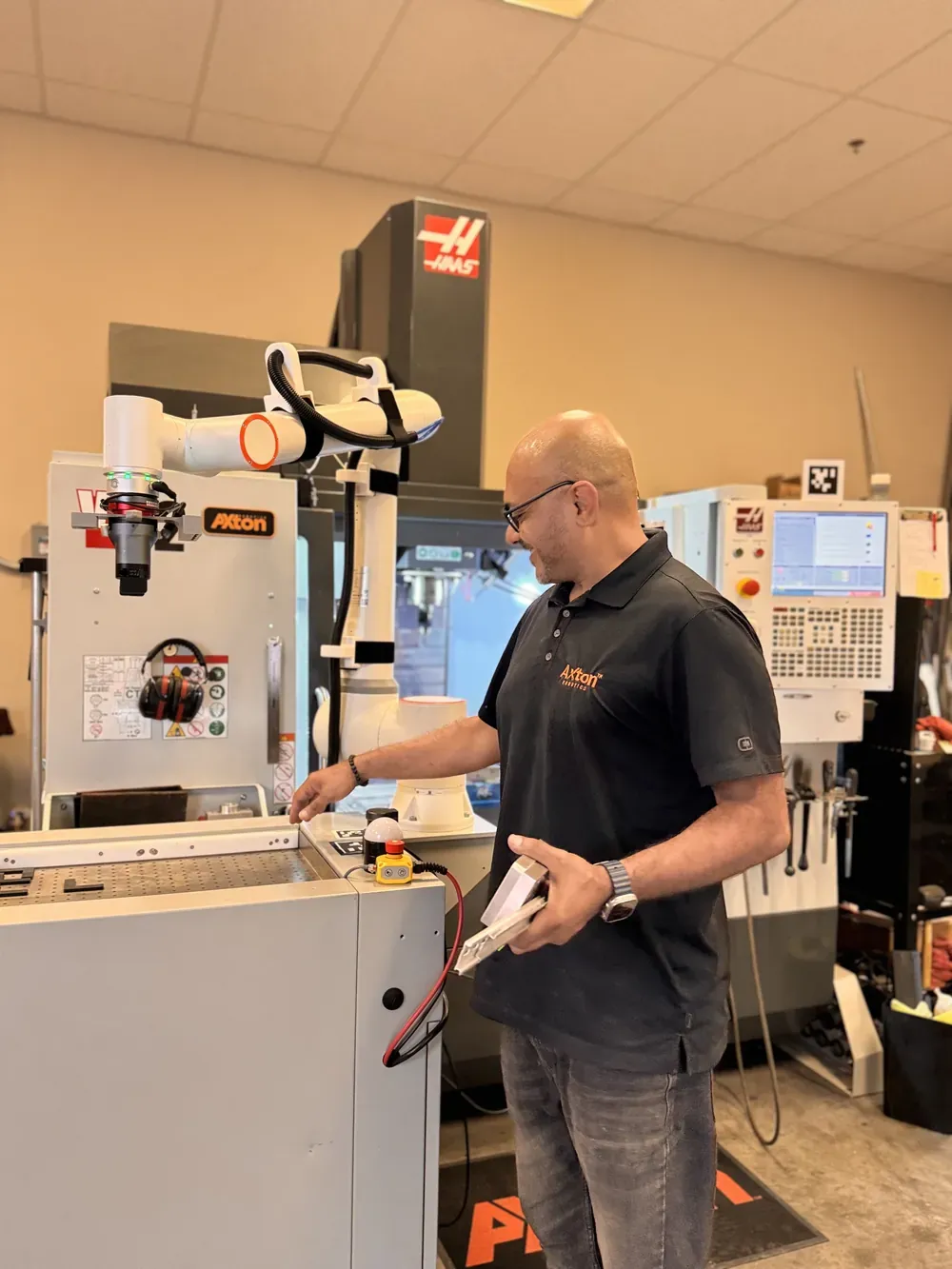
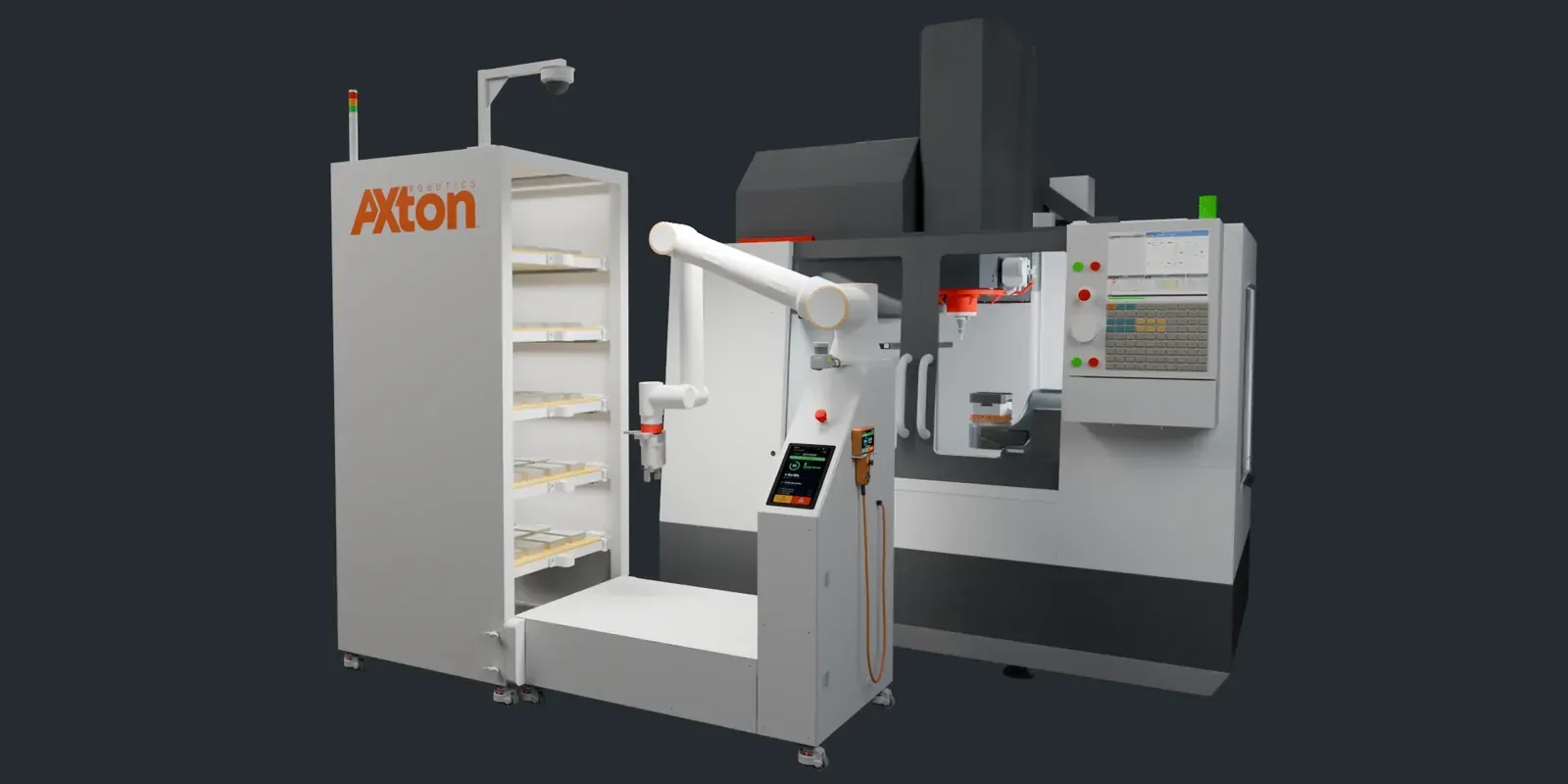
That's why the Axton Robotics station is mobile, plug and play, and built to work with standard CNCs.
The shops feeling the hiring pain the most deserve automation the most.
The next great shop won't be the one with the most people.
It'll be the one where every person is doing their best work, and the machines never wait.
How many hours did your spindles sit idle last week? Get in touch, and let's talk about getting them back.
In April we showed you the carousel. It worked. Then one question made us tear it up and start again.

Malak Mitch & Michael Nessim
Sep 24, 2026 — 4 min read

Most robots in machine shops are blind. They only work if every part sits exactly where it's supposed to. We wanted ours to look first.

Michael Nessim
May 14, 2026 — 3 min read